Discover the best of Antalya with exclusive insights and tips.
Discover the hidden secrets of USB ports and how they power your devices. Unplugged surprises await—dive into the tech world today!
When you think of USB ports, you might only consider their function for connecting devices, but there's a lot more to these little ports than meets the eye. Did you know that the very first USB specification was released in 1996? This means that USB technology has been evolving for over two decades! Through various iterations, from USB 1.0 to the current USB 4.0, the speed and efficiency of data transfer have improved dramatically. In fact, USB 3.0 can transfer data at speeds up to 5 Gbps, which is significantly faster than its predecessor, USB 2.0, which maxed out at just 480 Mbps.
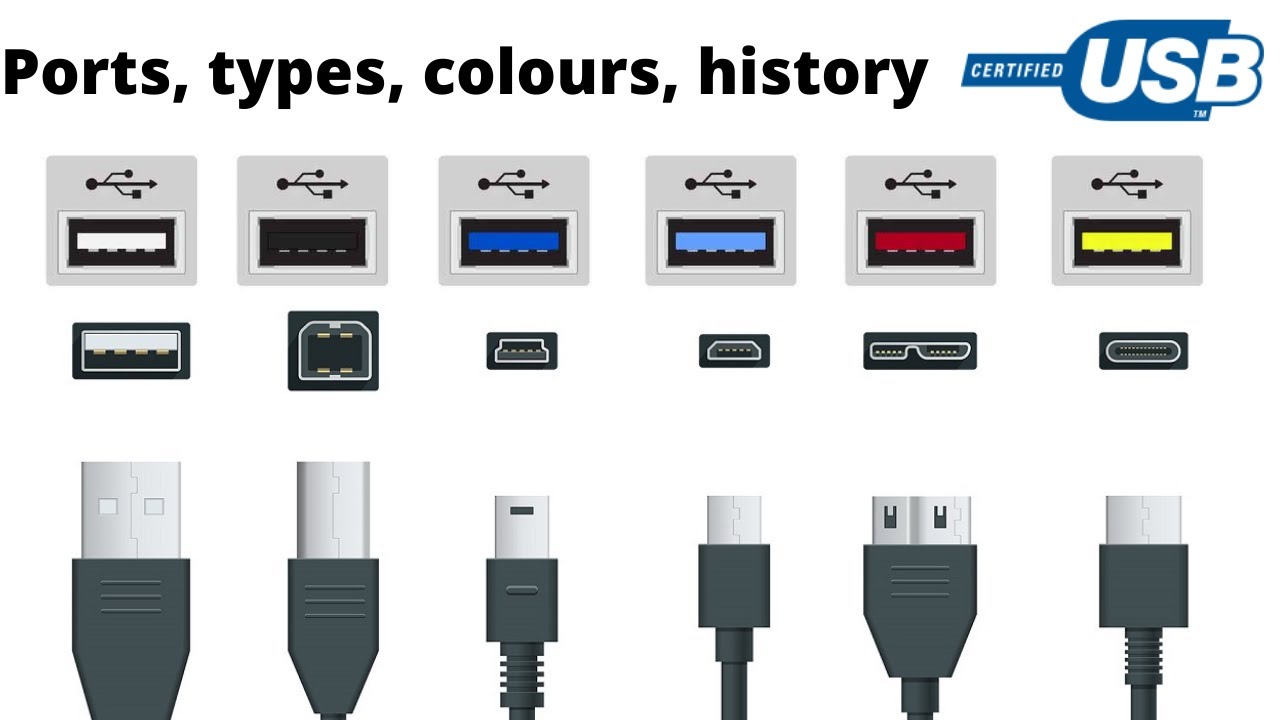
Another fascinating fact is that not all USB ports are created equal. You may have noticed different colors on USB ports, and this isn't just for aesthetics. USB 3.0 ports are typically blue to indicate their faster capabilities, while USB 2.0 ports are usually black. Additionally, certain USB-C ports can support video output and power delivery, making them versatile for various devices, including laptops and monitors. The adaptability of these ports is part of what makes USB technology so widespread; they can charge devices and transfer data all through the same connection, streamlining how we use our gadgets in our daily lives.

Looking for convenience and style in your bedroom? Check out our Top 10 Nightstands with Charging Stations, which combine functionality with modern design, allowing you to easily charge your devices while keeping your space organized.
The evolution of USB standards has significantly impacted device performance, with each new iteration bringing enhancements in speed, power delivery, and functionality. For instance, USB 2.0, introduced in 2000, offered data transfer rates of up to 480 Mbps, which was a substantial improvement over its predecessor, USB 1.1. However, as technology advanced, newer standards emerged, such as USB 3.0 and USB 3.1, which increased transfer speeds to 5 Gbps and 10 Gbps, respectively. These advancements allow users to transfer large files, such as HD videos and software applications, in a fraction of the time compared to older standards, thus enhancing overall productivity.
Moreover, the introduction of USB Power Delivery (USB PD) with USB-C has revolutionized how devices charge and transmit power. Unlike previous standards, which had fixed power outputs, USB PD can deliver up to 100 watts, enabling faster charging and the ability to power larger devices like laptops through a single cable. This flexibility not only improves convenience but also significantly reduces cable clutter. As users increasingly rely on various devices for daily tasks, understanding the impact of USB standards on performance is crucial for making informed choices about tech purchases.
The USB (Universal Serial Bus) standard, first introduced in 1996, was developed to create a unified connection for a variety of devices, allowing for easier data transfer and device charging. Its inception stemmed from the need to simplify the increasingly complex landscape of computer connectivity options, which included a myriad of serial and parallel ports. This need was recognized by a consortium of tech industry leaders, including Microsoft, Intel, and IBM, who aimed to create a universal solution. Over the years, USB has evolved significantly, with advancements such as USB 2.0, 3.0, and the latest USB-C standard, each bringing faster data transfer speeds and greater power delivery capabilities.
Today, USB has become an everyday essential, found everywhere from smartphones and laptops to kitchen appliances and cars. Its versatility is highlighted by the widespread adoption of various types of USB cables and connectors, allowing for universal compatibility and ease of use. In fact, the convenience of simply plugging in a device without the need for additional drivers or complicated setups has made USB a cornerstone in both consumer electronics and industrial applications. As technology continues to advance, the history of USB reflects its journey from a novel concept to an indispensable tool that has transformed the way we interact with technology.